
Living Through Change

The Buddhist Teachings on the Six Bardos

Self-Paced Course Led by Lineage Holder & Scholar
Tulku Pema Khandro, PhD

Buddhism’s complete map of transition, from the smallest daily change to the final one.

Every life is made of transitions. Some are small and daily, some break the world open. Buddhism has a name for the space between what was and what comes next: bardo.

Bardo represents profound liminality, states in between in which we are no longer what we were and we are not yet what we will be. Some may have been introduced to the concept through the Tibetan Book of the Dead and regard it only as a teaching about dying. It is far more than that.

Of the six bardos, three concern death, and within those teachings are profound instructions about mind, self, and change. The other three occur within this very life, the dream state, and meditation itself. Together they form a complete map of how to stay present with change rather than brace against it.

In this course, Buddhist Studies scholar, professor, and Nyingma lineage holder Tulku Pema Khandro, PhD, walks through all six in turn. She brings the precision of a trained academic and the warmth of a seasoned teacher, drawing on the bardo literature of the Great Perfection (rdzogs chen) and its history.

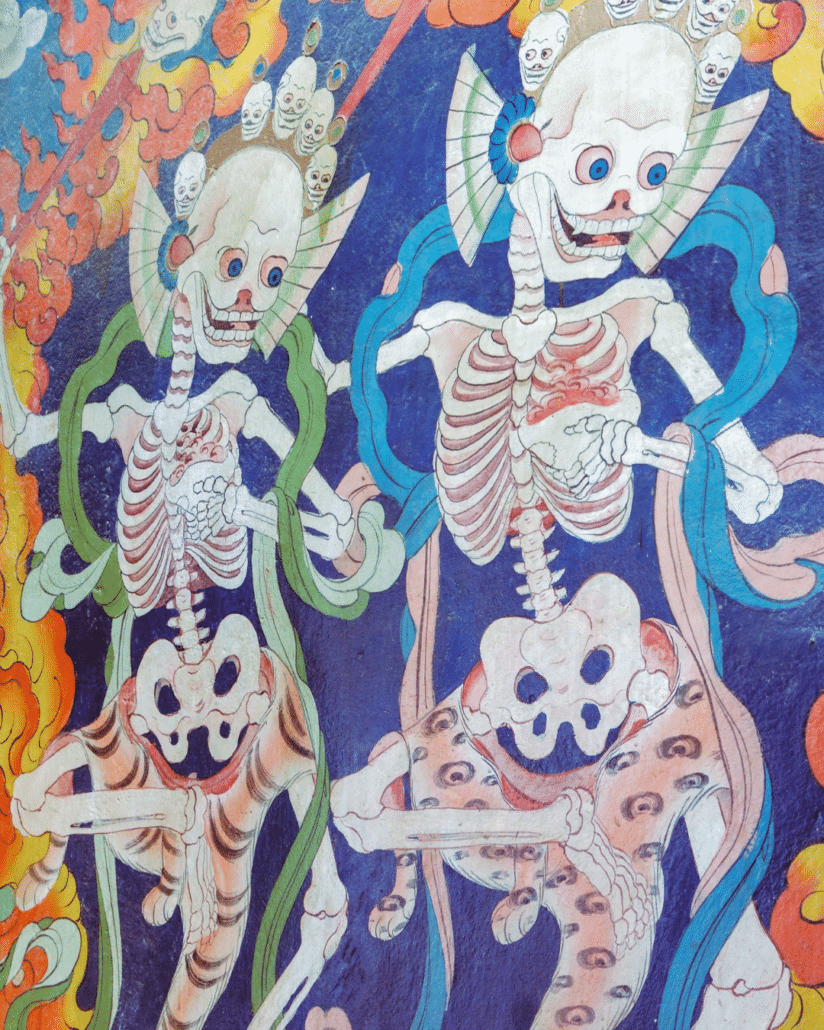
Introduction  a brief history
The story begins with American and European encounters with the so-called Tibetan Book of the Dead. That work covers, in essence, six states of transition, taught here in a sequence that explores how mind and body meet change.

The Bardo of Dying  ’chi kha’i bar do
The dissolution of the elements as a life comes to its end, the instructions traditionally given to the dying, and what is asked of those who sit beside them.

The Bardo of the Moment of Death  chos nyid bar do
The luminosity, or clear light, and the visions of the peaceful and wrathful deities.

The Bardo of Becoming  srid pa’i bar do
The movement toward the next life, and what the tradition says can still be done within it.

The Bardo of This Life  skye gnas bar do
The whole of a human life understood as a transitional state, and what follows from taking that seriously.

The Bardo of Dreaming  rmi lam bar do
What the tradition understood dreaming to be, and why the hours we spend asleep are not lost to us.

The Bardo of Meditation  bsam gtan bar do
Meditation as its own kind of in-between, and what becomes available to us there.

WHAT YOU WILL LEARN

  • What bardo means in its full sense, states of liminality, beyond its association with death alone.
  • The six bardos, what distinguishes each, and how they fit together as one teaching.
  • Where the bardo teachings come from, and how the Great Perfection tradition transmitted them.
  • What the tradition asks of the dying, and of those sitting with them.
  • How the instructions for the moment of death apply to the ordinary ruptures of a life.
  • Why the tradition treats dreaming and meditation as rehearsal rather than metaphor.

WHO THIS COURSE IS FOR

You do not need to be a Buddhist, and you do not need to be facing a loss. You only need to be someone whose life keeps changing.

This course has been useful to practitioners of every tradition and of none; to people in the middle of an ending they did not choose; to hospice workers, chaplains, nurses, and caregivers who sit with the dying as part of their work; and to readers who met the Tibetan Book of the Dead years ago and have wanted a serious account of it ever since.

The Lineage Holder and Teacher

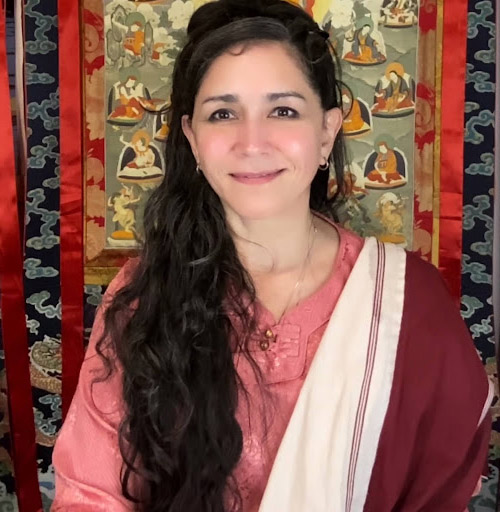
Tulku Pema Khandro, Ph.D.

Tulku Pema Khandro, PhD, is a scholar and teacher of Buddhist philosophy and practice. She holds a doctorate in Buddhist Studies from the University of Virginia. Ordained in the Nyingma lineage and enthroned as a tulku, she is an authorized lama and lineage holder in the Nyingma and Kagyu traditions, carrying the lineage of her predecessor, the first Pema Khandro, an early twentieth-century yoginī of eastern Tibet whose primary practices were Dzogchen and Chöd.

She is the founder of Ngakpa International and the Buddhist Studies Institute, and has led a worldwide community of practitioners since 1999. Her scholarly research concerns fourteenth-century Great Perfection (rdzogs chen) literature and the history of female contemplatives in the Great Perfection. Learn more about Pema Khandro –> 

FAQ – Frequently Asked Questions

No. These teachings are presented so that anyone can understand them and make use of them. Nothing here asks you to believe anything.

No. Longtime practitioners will find depth here, and those newer to practice will not be left behind. The course explains what it draws on as it goes.

In part. Three of the six bardos concern dying and what follows it, and these are taught directly, without euphemism. The other three concern our waking life, our dreaming, and our meditation. Many people come for the teachings on death and find that the others are the ones that stay with them.

Many people come to these teachings at exactly that moment, and they are taught with that in mind. The course is unhurried and self-paced, so you can stop and return as you need to. Only you can judge the timing. If you are in acute crisis, please seek out the people who can be present with you.

This course is open to both experienced practitioners and sincere newcomers. Beginners will gain a powerful introduction to Vajrayana as a living tradition, while long-time practitioners will encounter deeper layers of practice.

Ngondro (the Vajrayana preliminaries) is the traditional prerequisite. However, because these teachings are so rare and precious, sincere students are welcome to attend even if they have not yet completed Ngondro. If you are new, you may study now and complete Ngondro before engaging in further intensive practice of this cycle. For graduates of Ngondro, this course is an ideal way to deepen your Vajrayana path.

No. This course is offered as study and instruction. Where a practice would traditionally call for transmission from a teacher, that is said plainly rather than passed over.

Tuition & Enrollment

  • GENERAL TUITION
  • $195
  • Apply your Member Discount Code at checkout
  • 6.5 hours of learning content
  • 1 Year Access – study at your own pace

Financial Aid Considerations All course costs are set at a minimum fee already, with financial aid built into all tuition rates. Because we are a non-profit organization, the costs of all activities and overhead of our organization must be covered by the participants of the courses or donations and all courses are offered at below cost. For those who are experiencing genuine financial hardship and wish to enroll in the course, Scholarship applications are available. Applications must be received in advance. Programs are always free for monastics. 

Click Here for –> Financial Aid Application

Click here for –> Monastic Scholarship Application