Weekend Intensive with David Germano, PhD, and Pema Khandro, PhD



Online via Zoom
with recordings provided for all sessions
Sat–Sun, December 5-6, 2026
9am – 1pm PT
Engage in Ongoing Study + Practice
with Teachers and Community
Where does awakening actually live? Longchenpa’s answer is startlingly concrete: in the body. Chapter four of the Treasury of Words and Meanings describes how the enlightened bodies and primordial wisdoms (sku dang ye shes) abide within the human body, resident in the heart center and unfolding through a subtle anatomy of channels and luminous energy. Here is Dzogchen’s radical claim about embodiment: buddhahood is not a distant attainment but an intimate presence, already dwelling in the flesh of ordinary life.
This course invites a transformation of our view of body and its world. It addresses Dzogchen’s distinctive view of body, materiality and environment, and esoteric perspective of how primordial wisdom is immanent rather than merely transcendent of the world around us.
Join Dr. David Germano, among the world’s leading scholars of Dzogchen literature, and Pema Khandro, Buddhist Studies scholar, teacher, and lineage holder in the Dzogchen tradition, for a close reading of this remarkable chapter. Together they open Longchenpa’s vision of the subtle body: what the text says, what it meant in fourteenth-century Tibet, and what it offers contemplative practice now.
David Germano, PhD, is a leading Tibetologist and professor at the University of Virginia specializing in Tibetan and Buddhist Studies. His scholarship focuses on Dzogchen philosophy, contemplative traditions, and Tibetan intellectual history, particularly the works of Longchenpa. He has spent years studying within Tibetan communities in Asia, combining academic rigor with experiential understanding. As a pioneer in digital humanities and contemplative studies, his work bridges textual scholarship with innovative approaches to preserving and engaging Tibetan knowledge systems.
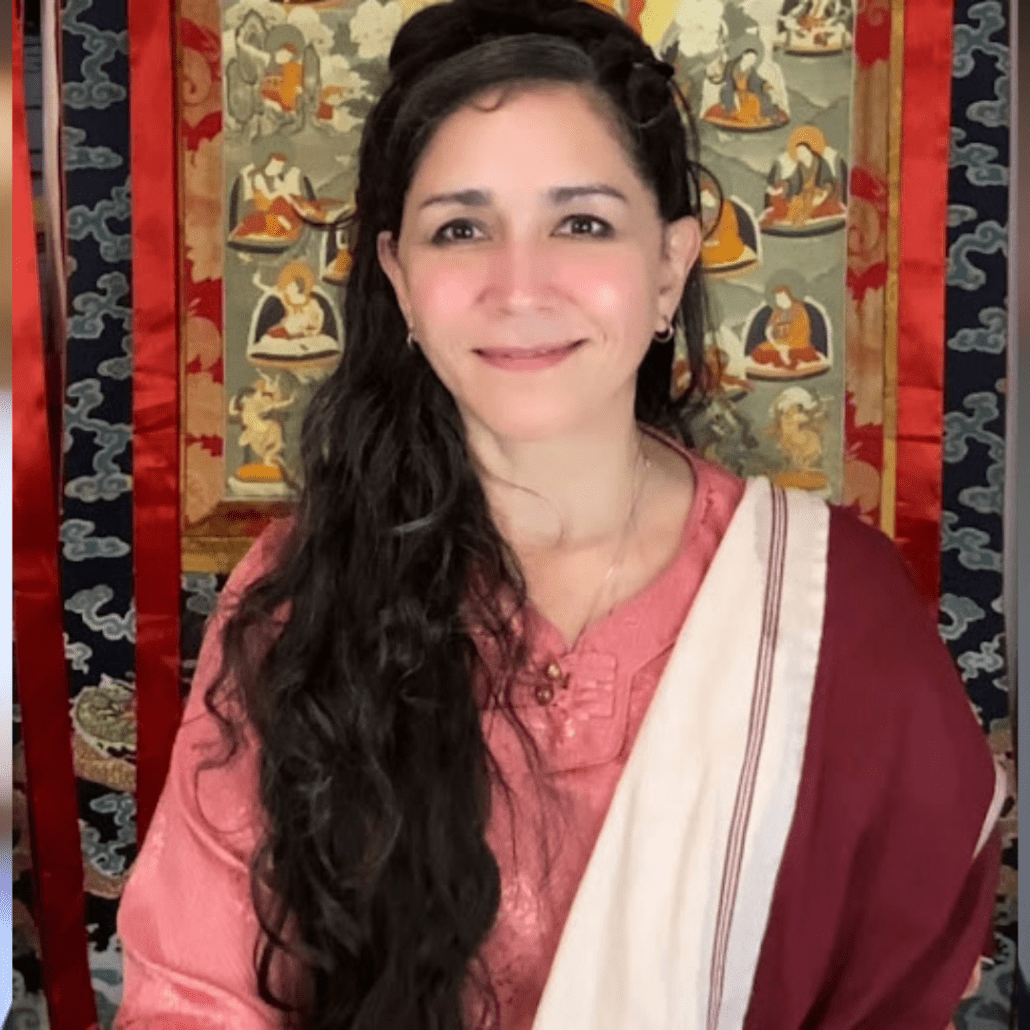
Pema Khandro is a female tulku, and a scholar-practitioner whose work centers on the recovery of women’s contemplative lineages. She holds a PhD in Religious Studies from the University of Virginia, where her research examined the role of female yoginis in fourteenth-century Tibetan Buddhism and she is currently a professor of Buddhist Studies. In particular, her scholarly research examines how Great Perfection (Dzogchen Nyingthig) transformed frameworks for women’s spiritual roles and contemplative practice and documenting the histories of the Great Perfection meditation curriculums. Pema Khandro has also spent her life practicing and teaching as a yoginī and lineage holder in the Nyingma tradition. She is the founder of the Buddhist Studies Institute and was enthroned to carry forward the lineage of Pema Khandro, a Tibetan yogini who taught in the late nineteenth and early twentieth centuries. Her teaching brings together rigorous scholarship and lived practice, framing Buddhist study within its full historical and intercultural context.
Do I need a background in Tibetan Buddhism to attend?
No formal background is required though familiarity with Dzogchen terms is helpful. Ngondro is recommended though not required. Ngondro is offered annually through the Buddhist Studies Institute starting in late January or early February.
Will recordings be available?
Yes. All registered participants receive recordings, usually available within 48 hours.
Is financial assistance available?
Yes. BSI offers reduced tuition rates and a limited number of full scholarships for those who need them.
Can I attend in person?
This program is online only, to allow the broadest possible access. BSI hosts in-person retreats usually three times a year — see our calendar for upcoming gatherings.

This ongoing series of immersive Dzogchen weekends offers a close reading of Longchenpa’s Treasury of Words and Meanings, with each intensive building on the last to progressively unfold the view of the ground (gzhi), the emergence of confusion, and the recognition of wisdom awareness. Through direct engagement with this root text, the program integrates rigorous scholarship with lived contemplative practice in a cumulative path of study. Learn More about ongoing Dzogchen Studies –>
The Buddhist Studies Institute is a project of Ngakpa International, a 501(c)(3) nonprofit dedicated to sustaining the householder yogi traditions of Tibet.